
Another Look at DeepSeek R1

A quiet earthquake just happened in the AI world. A Chinese company called DeepSeek released an AI model that's giving OpenAI a run for its money – literally and figuratively. Here's why you should care, and more importantly, how you can take advantage of it.
What's The Big Deal?
DeepSeek R1 just achieved something remarkable: it's matching GPT-4's capabilities in specific areas while being dramatically cheaper and fully open source. Imagine getting similar performance to a Tesla, but with the plans freely available and at 4% of the cost. That's essentially what DeepSeek has done in the AI world.
Why This Matters For You
If you're a developer, researcher, or just someone interested in AI, this is a game-changer for three reasons:
Cost: While GPT-4 charges about $60 per million tokens, DeepSeek R1 costs just $2.19. That's not a typo.
Features: It's currently the only reasoning model with built-in web search capabilities.
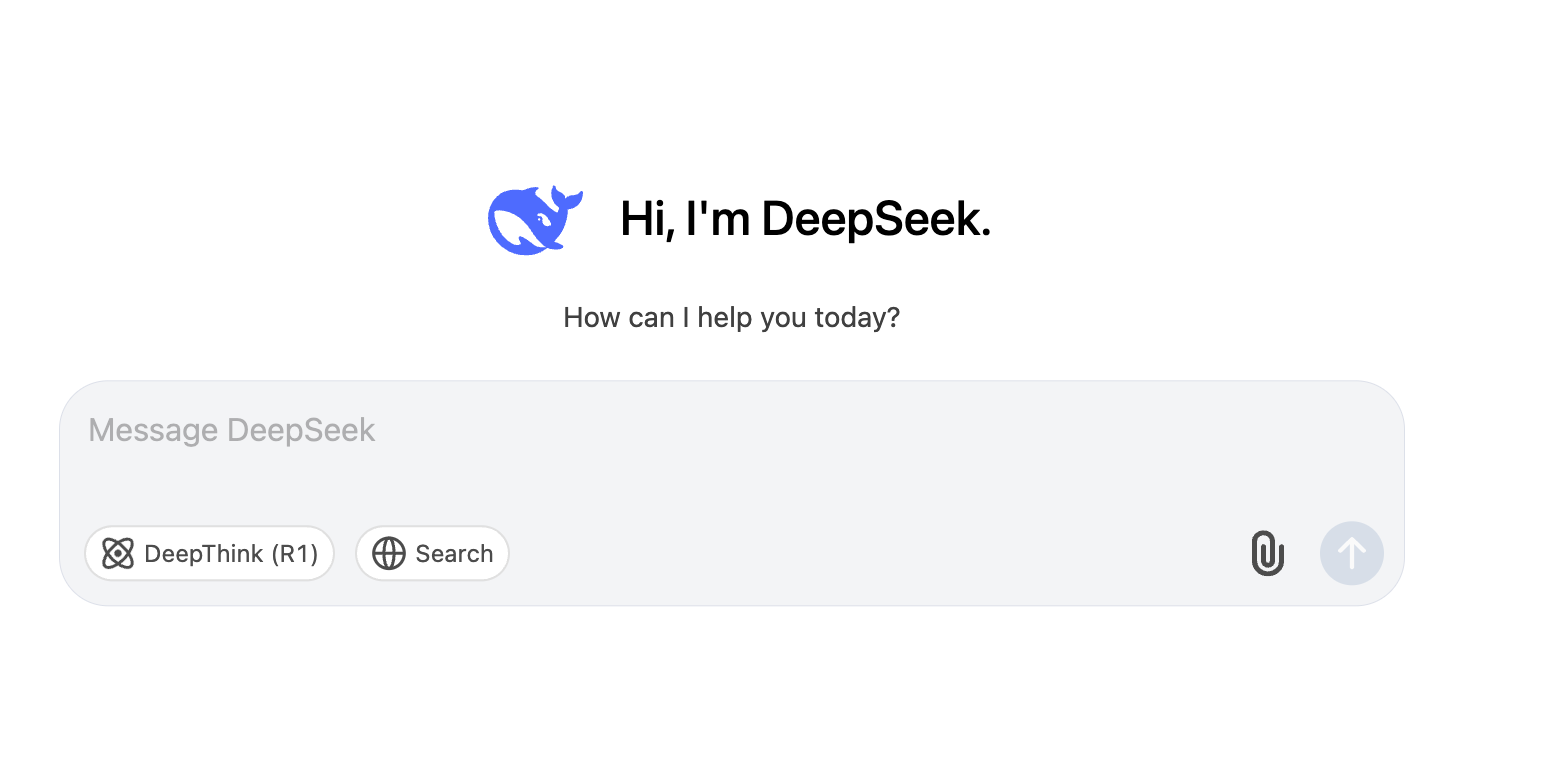
Accessibility: You can use it right now, for free, on their website – even with your Google account.
How to Start Using DeepSeek R1
For Casual Users:
Head to DeepSeek's website
Sign in with your Google account
Start with simple programming or mathematical questions - these are its strong suits
For Developers:
The model is already integrated into Cursor, the popular programming tool
You can use their API for your applications at a fraction of OpenAI's cost
If you're feeling adventurous, you can even download and run their smaller models locally
Pro Tips for Best Results:
Focus on mathematical and programming tasks - that's where it truly shines
Use it for step-by-step problem solving; it actually shows its reasoning process
Try the web search feature for technical research
The Real Magic: Small But Mighty
Here's what's fascinating: DeepSeek achieved this with a much smaller model. While exact comparisons are tricky, think of it this way - they're getting similar performance in specific areas while using significantly less computational power. This is like getting sports car performance from a highly efficient four-cylinder engine.
They even released smaller versions that can run on your personal computer or phone. One of their 32B parameter models outperforms some of OpenAI's smaller offerings, and there's even a tiny 1.5B parameter model that can run on your phone while still handling impressive mathematical and programming tasks.
What's The Catch?
Let's be real - there are some limitations:
It's not as strong as GPT-4 in general conversation and creative tasks
The model excels specifically at mathematics and programming but may lag in other areas
The user interface isn't as polished as ChatGPT's
What Should You Do Now?
If you're a developer: Start experimenting with the API. The pricing makes it feasible to build and test applications that would be cost-prohibitive with GPT-4.
If you're in academia or research: Look into running their smaller models locally. The ability to have powerful AI capabilities without constant API calls is a game-changer.
If you're just curious: Try the free web interface. Start with mathematical problems or programming questions, and compare the results with ChatGPT.
Looking Ahead
While OpenAI is pushing ahead with ambitious projects like their "Stargate Project," DeepSeek represents a different approach to AI development - one that prioritizes efficiency and openness over raw power. For most practical applications, this could be exactly what you need.
The AI landscape is becoming more diverse and interesting by the day. DeepSeek R1 isn't just another GPT alternative - it's a glimpse into a future where powerful AI tools are more accessible, affordable, and transparent.
Have you tried DeepSeek R1? I'd love to hear about your experiences in the comments below.
P.S. The most exciting part? This is just the beginning. The open-source nature of DeepSeek R1 means we'll likely see a wave of innovations built on top of it in the coming months.